
Biohazard & Specialist Cleaning
Blood & Bodily Fluid Cleaning in Liverpool & Merseyside
Safe removal and decontamination of blood and bodily fluid contamination across residential and commercial properties. Our operatives follow strict procedures to minimise pathogen risk throughout.
Health Risks and Why Specialist Handling Is Required
Blood and bodily fluids can carry bloodborne pathogens including hepatitis B, hepatitis C and HIV, as well as a range of bacterial infections. Exposure can occur through skin contact, inhalation of dried particles or contact with mucous membranes — risks that are present even when contamination appears minor or dried.
Attempting to clean blood or bodily fluid contamination without appropriate protective equipment and specialist products can spread contamination, increase exposure risk and leave surfaces that appear clean but remain biologically contaminated. This is why the work requires trained operatives rather than general cleaning staff.
We are instructed in a wide range of situations — including scenes following accidents, medical emergencies, assaults, self-harm and deaths. Each is handled with discretion and without unnecessary detail being communicated beyond those who need to know.
Our Decontamination Approach
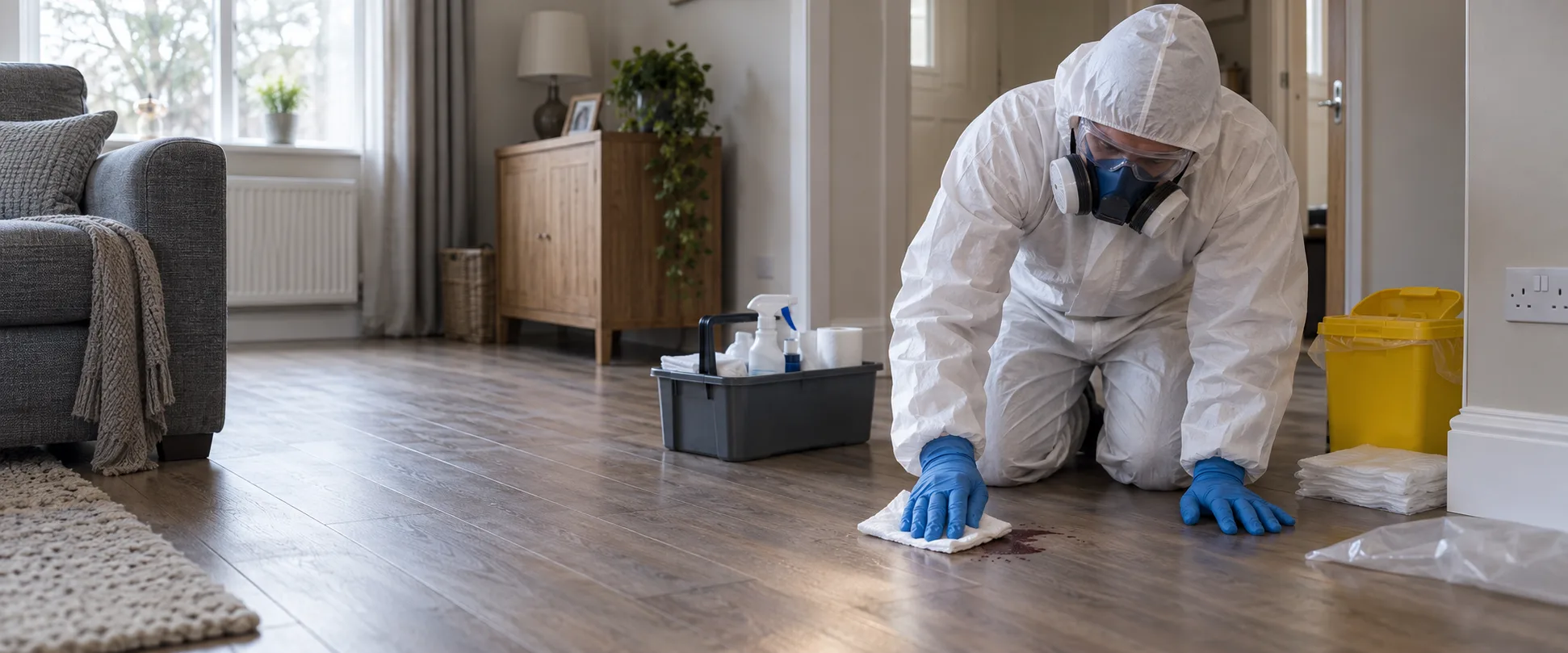
Our operatives work in full PPE appropriate to the level of contamination present. The process follows a structured approach:
- 1.
Assessment
We assess the extent and spread of contamination before work begins. Visible contamination is rarely the full picture — fluids saturate porous materials and can travel further than the visible stain suggests.
- 2.
Removal of affected materials
Items that have absorbed biological material and cannot be safely decontaminated — including soft furnishings, carpet, clothing and similar — are removed, bagged and disposed of as regulated biological waste.
- 3.
Surface decontamination
Remaining hard surfaces are cleaned with specialist enzymatic and disinfectant agents effective against the relevant pathogens. Products are applied to appropriate dwell times to ensure efficacy, not simply wiped over.
- 4.
Verification and sanitisation
Once decontamination is complete, a final sanitisation pass is carried out. Where required, UV lighting or ATP testing can be used to verify that biological material has been fully removed.
Compliant Disposal
All biological waste removed during the process is disposed of in line with current regulations for hazardous biological waste. We hold an EA registered waste carrier licence (CBDU610261) and can provide transfer documentation where required for insurance, housing authority or legal purposes.
PPE and Operative Safety
Our operatives use full protective equipment including disposable coveralls, nitrile gloves, face shields and respiratory protection appropriate to the situation. This protects them and prevents the inadvertent transfer of contamination to unaffected areas of the property.
If the contamination involves an element of trauma — a scene following an accident or incident — please see our trauma cleaning page for more detail on how we manage those situations.
When the Property Also Needs Sanitising
Decontamination removes biological material and reduces pathogen risk significantly. For properties where full surface disinfection is also required — for example where the space is to be returned to use quickly — our sanitisation and disinfection service can be carried out as a final stage in the same visit.