
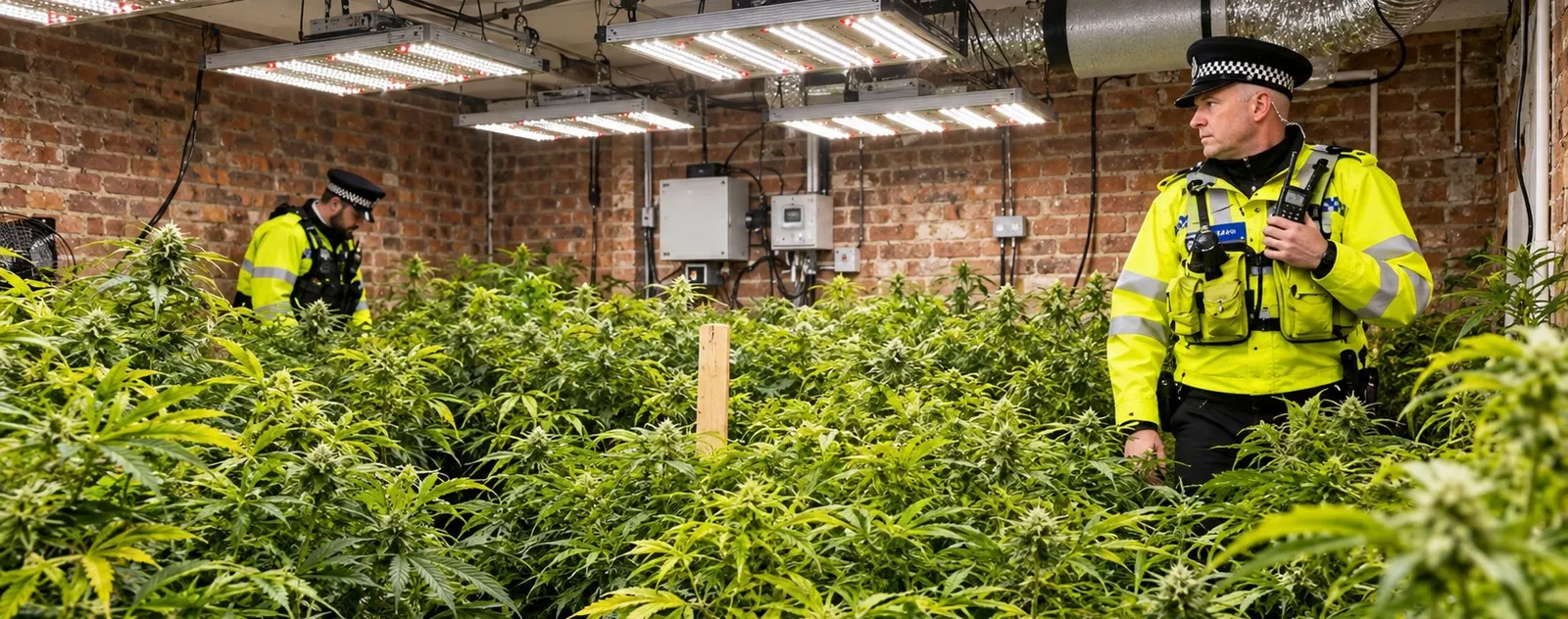
Why Specialist Clearance Is Required
Properties previously used for cannabis cultivation can require considerably more than ordinary rubbish removal. Beyond the physical equipment and waste, there may be electrical concerns, water damage, mould, strong persistent odour and associated drug-related waste — all of which require a structured and careful approach.
Merseyside House Clearance can assess and clear the non-live operational contents and general waste from former cultivation properties where it is safe and lawful to do so. Items that may need to be removed include:
Do Not Enter an Unsafe Property
Do not enter a former cultivation property where there is exposed live wiring, serious electrical damage, flooding around electrical equipment, structural instability, an active police restriction, or other unknown hazardous conditions.
Obtain appropriate professional safety clearance or confirmation before entering. Where in doubt, contact us and we can discuss the situation before any visit is arranged.
Electrical Safety
Merseyside House Clearance is not an electrical contractor and does not carry out unsafe electrical isolation, assessment or repair work. Former cannabis cultivation properties can involve significant electrical hazards:
Where unsafe electrical conditions are suspected, the property must be assessed and made safe by a qualified electrician or the relevant utility provider before any clearance work begins. We will raise this at the enquiry and survey stage where it appears relevant, and will not proceed where the site is not safe to work in.
Police Release & Lawful Access
Clearance should only proceed once the property has been formally released for lawful access and work. Where police, enforcement authorities, landlords, insurers or other agencies are involved, the responsible client should confirm that the property can be entered and cleared before we attend.
We will not remove items that are subject to an active police restriction, investigation or seizure. Any items identified as potentially evidential are left in place.
Plant & Organic Material
Plant material, soil, containers and associated organic waste require appropriate assessment and removal as part of the clearance. This material forms a significant part of the odour and contamination in many former cultivation properties and should be removed before any cleaning or deodorisation is carried out.
Water Damage & Mould
Cultivation environments can involve high humidity, water leaks, condensation and poor ventilation — leading to water damage, damp materials and mould. Where these conditions are present, the extent of the problem will be noted at the survey stage.
Where mould remediation or structural drying falls outside the scope of what we provide, we will advise clearly so that appropriate specialist contractors can be arranged before or alongside our work.
Odour Treatment
Former cultivation properties can retain strong odour from plant material, damp, stagnant air, waste and contaminated furnishings. Deodorisation without source removal is not an effective solution — the correct sequence is:
- 1Remove the source — plant material, soil, contaminated furnishings
- 2Clear all odorous and contaminated materials
- 3Physically clean all affected surfaces
- 4Assess remaining odour once sources are dealt with
- 5Apply specialist deodorisation where required
Additional deodorisation methods where residual odour remains:
Wet fogging
A fine mist treatment applied to affected surfaces and airspace.
Dry fogging
A dry vapour treatment suited to surfaces where moisture is not appropriate.
Ozone treatment
Used where odour has penetrated porous materials; requires full exclusion of people and pets during treatment.
Ozone Treatment — Safety
Where ozone is used, all people, pets and other occupants must be excluded from the treatment area while the generator is operating. Re-entry should only occur after the appropriate treatment and ventilation period. Ozone is not a substitute for physical cleaning and source removal.
Property Damage
Former cannabis cultivation can leave physical damage beyond the waste and equipment. Common examples include:
Merseyside House Clearance primarily provides clearance and specialist cleaning. Building repair, rewiring, plastering and structural repair fall outside our scope — where these are required following clearance, we will advise so that appropriate contractors can be arranged.
Void Property Recovery
For landlords, housing associations, local authorities and property managers, the aim following a former cultivation property is often to move as quickly as possible to inspection, electrical assessment, building works and re-letting. Our role is to clear the property efficiently so that the next stage of recovery can begin.
Services that may be included in the scope of work:
Sharps & Drug Paraphernalia
Some former drug-related properties may also contain discarded needles, sharps, drug paraphernalia, unknown containers or other hazardous waste. Where these are present or suspected, additional procedures are used and appropriate containment and disposal routes applied. Related services:
Our Process
Initial Enquiry
Discuss the property and whether it has been formally released for access — by the police, landlord, insurer or other authority where relevant.
Safety Information
Identify known concerns — electrical damage, water, structural issues or restricted areas — before any attendance is arranged.
Survey
Assess the volume of waste, condition of the property, access and site conditions.
Written Scope & Quotation
Define clearly what can safely be removed and cleaned, and what falls outside the scope of this service.
Pre-Work Safety Requirements
Confirm that any necessary electrical, police, utility or specialist actions have been completed before work begins.
Clearance
Remove agreed contents, cultivation waste and general rubbish in a controlled and methodical way.
Specialist Cleaning
Clean affected areas where included in the agreed scope.
Odour Treatment
Address persistent odour where required, using appropriate methods after the source has been removed.
Completion
Agreed photographs, reporting or waste documentation provided on completion where applicable.
Working with Professional Clients
We work with housing associations, local authorities, landlords, letting agents, solicitors, receivers and commercial property managers on cannabis property clearance and recovery. The following can be provided where applicable:
Confidentiality
Former cannabis properties can involve sensitive legal or tenancy circumstances. We do not publish client names, tenant details, property addresses, police information, case information or photographs without appropriate permission or lawful reason.
See our Confidentiality & Client Data page for further information.
How Much Does Cannabis Property Clearance Cost?
There is no standard price. Cost depends on a number of factors:
A site survey is generally the most reliable way to prepare an accurate written quotation. Where a survey is not immediately possible, photographs of the general property condition can assist with an initial assessment. A written quotation is provided before any work begins — there is no obligation to proceed.
Service Areas
Based in Merseyside, Liverpool and the surrounding area is our primary territory. We regularly cover Wirral, Sefton, Knowsley, St Helens, Halton, Warrington and Cheshire, and also work across Greater Manchester and the wider North West.
Liverpool
- City Centre
- North Liverpool
- South Liverpool
- West Derby
- Garston
- Anfield
- Kensington
- Toxteth
- Wavertree
- Everton
Wirral
- Birkenhead
- Wallasey
- Bebington
- Heswall
- Ellesmere Port
Sefton
- Bootle
- Crosby
- Southport
- Formby
- Maghull
Knowsley
- Kirkby
- Huyton
- Prescot
- Halewood
St Helens & Halton
- St Helens
- Newton-le-Willows
- Runcorn
- Widnes
Warrington & Cheshire
- Warrington
- Chester
- Northwich
Contact us to confirm availability for your specific location.
Frequently Asked Questions
Yes. We provide clearance for former cannabis cultivation properties once they have been lawfully released for access. This includes removal of plant waste, soil, equipment and general contents, along with cleaning and odour treatment where required. We do not carry out electrical isolation or repair work — this must be handled by a qualified electrician before clearance begins.
Yes. Where a property has been the subject of a police operation or enforcement, it should be formally released and lawful access confirmed before we attend. The client or their representative should confirm this before a survey or clearance is arranged. We will not remove items that are subject to an active police restriction or investigation.
Yes — non-live, de-energised cultivation equipment such as pots, racking, fans, ducting, filters, timers, plastic sheeting and similar items can be included in the clearance scope. Any equipment connected to an unsafe or live electrical supply must be made safe by a qualified electrician before we proceed.
Yes. Soil, plant residue, containers and associated organic waste can be removed and disposed of appropriately as part of the clearance.
We do not carry out electrical isolation, assessment or repair. Where tampered, bypassed or damaged electrics are suspected, the property should be assessed by a qualified electrician or relevant utility provider before any clearance work begins. We will raise this at the enquiry and survey stage where it appears relevant.
Yes. Carpets, underlay, abandoned furniture and general household contents can be included in the clearance scope where agreed. Damaged floor coverings are commonly removed as part of post-cultivation property recovery.
Yes. Former cultivation properties can retain strong odour from plant material, damp and contaminated furnishings. Our approach is to remove the source first — plant waste, soil and affected materials — and then apply specialist deodorisation where residual odour remains. Deodorisation alone, without source removal, is not an effective long-term solution.
Yes. Cleaning of affected surfaces can be included in the agreed scope of work. Where mould, damp or structural damage requires specialist remediation beyond cleaning, we will advise at the survey stage so that appropriate contractors can be arranged.
Yes. We regularly work with landlords, housing associations, local authorities and property managers on void property recovery following cannabis cultivation. Written quotations, defined scopes, completion reporting and waste documentation are provided where required.
Yes. Some former drug-related properties may also contain discarded needles, sharps or other drug paraphernalia. These can be included in the scope of work using appropriate handling procedures and approved containers.
Cost depends on the property size, volume of waste, number of rooms, access, soil and plant waste, furniture, carpet removal, cleaning requirements, odour treatment and duration of work. A site survey is generally the most reliable way to prepare an accurate written quotation.
Need a Former Cannabis Property Cleared?
Call us to discuss the property. We can arrange a survey and provide a written quotation before any work begins. There is no obligation to proceed.