
House Clearance Services
Fly-Tipping Removal
Fast, responsible removal of fly-tipped waste across Liverpool and Merseyside. Registered waste carrier CBDU610261 — written quotations and waste documentation available.
Responsible Fly-Tipping Removal
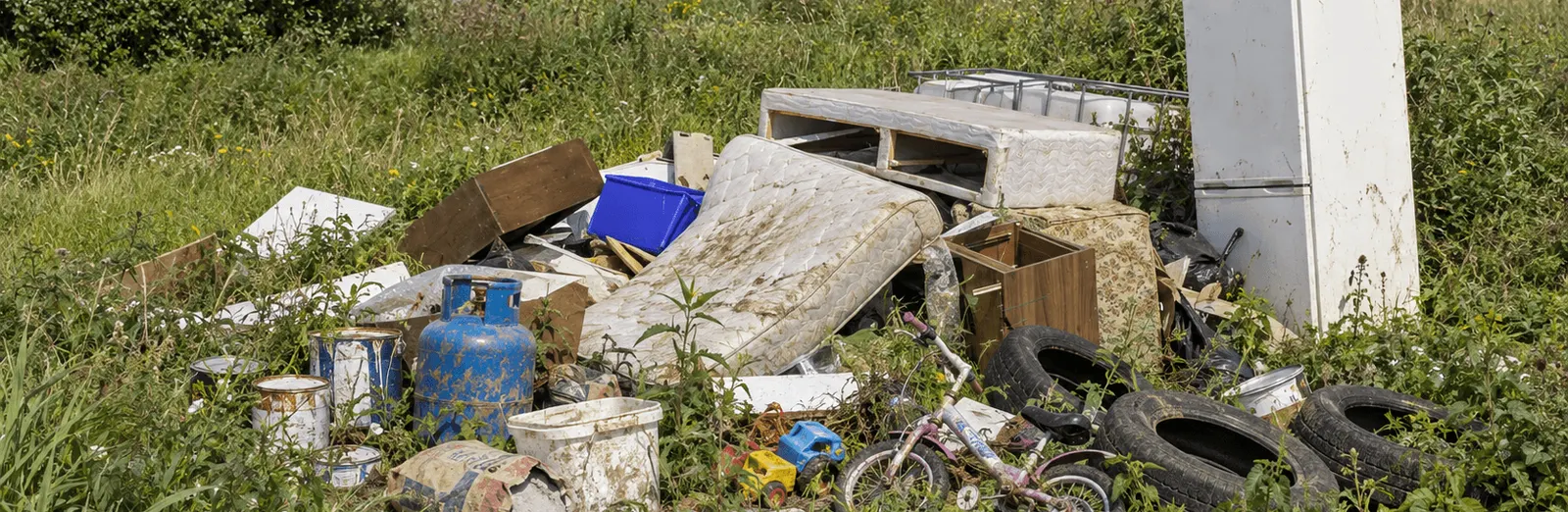
Fly-tipped waste on private land is a practical problem that falls on the landowner or property manager to resolve. Merseyside House Clearance provides professional fly-tipping removal across Liverpool and Merseyside, handling the assessment, loading, transport and lawful disposal of illegally dumped material.
We are registered with the Environment Agency as a waste carrier — registration number CBDU610261 — and operate within the legal waste duty of care framework. Every removal is carried out by our own team using our own vehicles.
What We Remove
Fly-tipped waste varies widely in content and volume. We routinely remove:
- Furniture, mattresses and upholstered items
- White goods and electrical equipment
- Bags and boxes of household waste
- Clothing, textiles and general rubbish
- Garden waste and organic material
- Packaging, pallets and commercial waste
- Mixed loads from residential and commercial properties
Hazardous materials — including asbestos-containing materials, chemicals, gas cylinders, clinical waste or contaminated soil — require specialist handling and assessment. Contact us before booking if you believe hazardous material is present.
Where We Work
We carry out fly-tipping removal across Liverpool and Merseyside, including Knowsley, Sefton, Wirral, St Helens and Halton. We also cover parts of Cheshire, Warrington and the wider North West — contact us to confirm whether your location is within our current working area.
Private Land
We work on all types of private land where fly-tipped waste has been deposited, including:
- Residential gardens, driveways and rear yards
- Vacant land and derelict sites
- Commercial yards, car parks and loading areas
- Industrial and warehouse properties
- Rural locations and farm land
- Managed housing and social-housing estates
Council Notices, Fly-Tipping and Property Clearance
Received a notice from the council about rubbish, fly-tipping or the condition of a property? Send us a copy of the full notice, including the deadline and any photos or documents that came with it. We’ll look at what the council is asking for and let you know how we can help.
With your permission, we can speak directly to the council or Environmental Health on your behalf. We’ll confirm that you’ve contacted us, clarify what needs doing and, if more time is needed, ask whether the council will agree to a realistic timetable. The original deadline still applies unless the council confirms a change.
We can take care of the agreed clearance and clean-up, including removing fly-tipped waste from private land where you have authority to arrange the work. Once the job is finished, we can provide a completion report with photos to show what’s been done.
Which notice have you received?
Councils use different notices for different problems. The table shows which notice may apply. The name and wording on yours will be on the notice itself.
| Problem | What the notice may be called |
|---|---|
| Strong smells from rotting rubbish or an unsanitary property | Abatement Notice under section 80, if the conditions amount to a statutory nuisance. Environmental Protection Act 1990, section 80 (opens in a new tab) |
| Filthy or verminous premises requiring cleaning or disinfection | Section 83 notice – Cleansing of filthy or verminous premises under the Public Health Act 1936. Public Health Act 1936, section 83 (opens in a new tab) |
| Rats or mice on the property | Section 4 notice under the Prevention of Damage by Pests Act 1949. Prevention of Damage by Pests Act 1949, section 4 (opens in a new tab) |
| Overgrown garden or untidy land affecting the surrounding area | Section 215 notice, often called an Untidy Land Notice under the Town and Country Planning Act 1990. GOV.UK guidance on section 215 notices (opens in a new tab) |
| Fly-tipped waste that the council requires to be removed | Section 59 waste removal notice under the Environmental Protection Act 1990. Environmental Protection Act 1990, section 59 (opens in a new tab) |
Strong smells from rotting rubbish or an unsanitary property
Abatement Notice under section 80, if the conditions amount to a statutory nuisance. Environmental Protection Act 1990, section 80 (opens in a new tab)
Filthy or verminous premises requiring cleaning or disinfection
Section 83 notice – Cleansing of filthy or verminous premises under the Public Health Act 1936. Public Health Act 1936, section 83 (opens in a new tab)
Rats or mice on the property
Section 4 notice under the Prevention of Damage by Pests Act 1949. Prevention of Damage by Pests Act 1949, section 4 (opens in a new tab)
Overgrown garden or untidy land affecting the surrounding area
Section 215 notice, often called an Untidy Land Notice under the Town and Country Planning Act 1990. GOV.UK guidance on section 215 notices (opens in a new tab)
Fly-tipped waste that the council requires to be removed
Section 59 waste removal notice under the Environmental Protection Act 1990. Environmental Protection Act 1990, section 59 (opens in a new tab)
Professional Clients
We regularly carry out fly-tipping clearances on behalf of housing associations, social landlords, property managers, letting agents and commercial landowners. We can work to a written scope, provide completion photographs, and issue waste transfer documentation where required. Our reporting can support insurance claims, legal proceedings and housing management records where applicable.
Quotations
The cost of a fly-tipping removal depends on the volume of waste, its composition, the location and access conditions. We assess each job individually and provide a written quotation before any work begins. For most removals, clear photographs of the deposited waste and its location are sufficient for an initial guide price.
We do not charge by the bag or apply fixed per-item pricing to fly-tipped loads — the nature of mixed waste means a proper assessment gives a more accurate and fair result.
Waste Documentation
Where required, we provide waste transfer documentation confirming that material has been removed and disposed of through a registered, lawful route. This documentation can be useful for landlords, housing managers, local authorities and insurers.
Reporting the Fly-Tip
If fly-tipping has occurred on your land, you may wish to report it to your local council and, where CCTV or other evidence is available, to the police. We can carry out the removal while any separate reporting or investigation process takes place. We do not interfere with evidence without appropriate authorisation.
Frequently Asked Questions
Can you remove fly-tipped waste from private land?
Yes. We remove fly-tipped waste from private land, including residential gardens, driveways, commercial yards, industrial sites and rural locations across Liverpool and Merseyside. As a registered waste carrier, we handle removal, loading, transport and responsible disposal.
Who is responsible for clearing fly-tipped waste on private land?
On private land, the responsibility for removing fly-tipped waste generally falls on the landowner or occupier, regardless of who deposited it. Local authorities deal with fly-tipping on public land. If you are unsure of your obligations, seek appropriate legal advice.
Can you provide documentation showing the waste was legally disposed of?
Yes. Where required, we can provide waste transfer documentation showing that material was removed and disposed of through a legitimate, registered route. This can be useful for landlords, housing managers and insurers.
What types of fly-tipped waste can you remove?
We handle general household and commercial fly-tipped waste including furniture, white goods, bags of rubbish, packaging, clothing, and mixed waste. Hazardous materials — including asbestos, chemicals, gas cylinders, clinical waste or contaminated soil — may require specialist assessment. Contact us to discuss before booking.
Can you provide a quotation before starting?
Yes. We assess the volume, type and location of the waste and provide a written quotation before any work begins. For straightforward removals, photographs are often sufficient to prepare an initial guide price.
Do you work with housing associations and local authorities?
Yes. We carry out fly-tipping removal for housing associations, social landlords, property managers and commercial landowners. We can work to written scope, provide completion photographs and issue waste documentation where required.